Узнайте, как правильно использовать кросс-ссылочные номера фильтра, подтверждая размеры, соединения, рейтинг фильтрации, материалы и условия работы перед заказом.
A filter cross-reference number is often the fastest way to begin a replacement search. It is not, however, proof that two filter elements are interchangeable. Two elements can share a similar part number, outside diameter or appearance while differing in filtration rating, media, seal material, bypass design or pressure capability.
For maintenance teams, the safest approach is to treat a cross-reference as a starting point for verification. This guide explains what a reference number can confirm, what it cannot confirm, and which measurements and application details should be checked before ordering a replacement filter element.
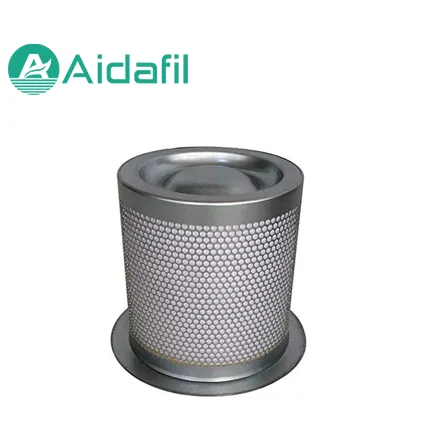
What a cross-reference can and cannot tell you
A cross-reference may help identify a likely replacement family. It can be useful when the original marking is still visible, the equipment records are incomplete or the existing filter has already been removed.
It should not be used as the only source of confirmation. A reliable match normally requires evidence from several areas:
- the complete original part number and any aliases;
- the equipment manufacturer, model and installation position;
- measured dimensions and connection details;
- the required filtration rating and filter media;
- seal material, operating pressure and temperature;
- fluid type, flow rate and contamination-control requirements.
If one of these details is unknown, the correct decision may be to request an engineering review rather than order by appearance alone.
The seven-point fit check
Use the following checklist when comparing an original filter element with a proposed replacement.
| Check | What to confirm | Useful evidence |
|---|---|---|
| 1. Part number | Complete number, suffix and alternate references | Filter marking, equipment manual, purchase record |
| 2. Dimensions | Outside diameter, inside diameter, overall length and connection size | Calibrated measurements and photos with a ruler |
| 3. Filtration rating | Nominal or absolute rating, beta ratio where specified | Datasheet, equipment specification or original label |
| 4. Filter media | Material, construction and intended fluid compatibility | Existing filter description, datasheet or application data |
| 5. Seals | Seal material, profile and position | Photos of the used element and the housing sealing area |
| 6. Operating conditions | Pressure, temperature, flow and fluid viscosity | Equipment nameplate, process data and maintenance records |
| 7. Installation position | Housing type, flow direction and access requirements | Equipment model, housing photos and installation notes |
1. Read the complete part number, not just the main digits
A part number can contain suffixes or prefixes that identify a connection, seal, rating or packaging variation. Removing these characters can turn an accurate reference into a broad family search.
Record the number exactly as printed, including punctuation, spaces and additional labels. If the same number appears in more than one place, photograph both the filter and the equipment nameplate. When records contain an old and a new number, keep both for comparison.
A reference is most useful when it is connected to a specific installation and a specific set of requirements. It should not be used to imply that a replacement was made by, authorized by or sponsored by another manufacturer.
2. Measure the element correctly
Measurements should be taken with a clean element and a reliable measuring tool. At minimum, record:
- outside diameter;
- inside diameter or the relevant bore dimension;
- overall length, including end caps but excluding temporary packaging;
- thread type, pitch or connection description where applicable;
- seal diameter, profile and location;
- the direction of flow and the position of any bypass feature.
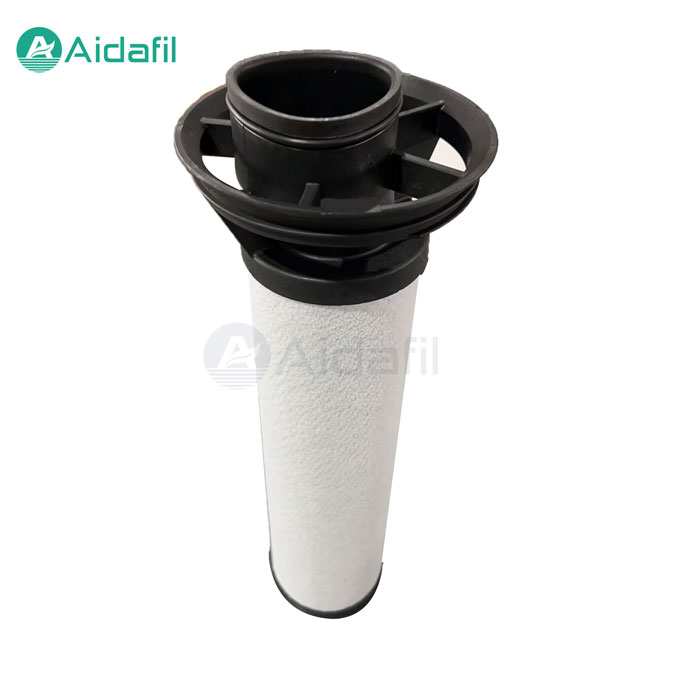
Place a ruler beside the element in the photograph so the image can be checked later. Do not rely on a photo without a scale. A slightly different end cap, pleat pack or seal can prevent correct seating even when the main dimensions look similar.
3. Confirm the filtration requirement
“Same size” does not automatically mean “same filtration performance.” Replacement elements may use different media, surface area, pleat construction and efficiency targets.
Check whether the equipment requires a nominal rating, an absolute rating or a beta ratio at a specified particle size. If the original documentation is unavailable, use the fluid, component sensitivity and contamination-control target to define the requirement before comparing products.
For hydraulic systems, also confirm flow direction, collapse resistance and bypass arrangements with the equipment or filter supplier. For compressed-air applications, verify the filtration stage and the presence of any coalescing or drainage function.
4. Confirm media, seals and operating conditions
The filter medium must be compatible with the fluid and the operating environment. Seal selection is equally important: an element can fit mechanically but still leak or degrade if the seal material is unsuitable for the fluid or temperature.
Provide the normal operating pressure, peak pressure, temperature range, flow rate and viscosity whenever available. These details help determine whether a proposed replacement is suitable for the duty cycle rather than only for a short trial.
5. Match the application, not only the old filter
The same equipment model can use different filter configurations depending on production date, regional variant or optional equipment. A maintenance record may also contain an earlier replacement that was not the original specification.
Use the equipment nameplate and installation position as part of the identification. For critical systems, confirm whether the filter is on a pressure line, return line, suction line, pilot circuit or accessory circuit. This context can reveal requirements that are not visible in a single part number.
6. Send a complete verification package
A concise inquiry is easier to verify than a long list of uncertain references. Include:
- the complete original part number and any known alternatives;
- equipment brand, model and serial or production details if available;
- three to five clear photos of the complete element and housing;
- photos of markings, seals and end connections;
- measured dimensions with a visible ruler or caliper reading;
- fluid, flow, pressure, temperature and filtration requirements;
- the quantity required and the required delivery date.
Do not remove or alter a used element before documenting its markings. If the element is damaged, photograph the damage and the area where it was installed.
Common cross-reference mistakes
- Ordering from the outside diameter alone. End caps, seals and length may still differ.
- Assuming all suffixes are optional. A suffix may define the connection or seal configuration.
- Ignoring the required filtration rating. A dimensionally similar element may provide a different level of protection.
- Using an old maintenance record without checking the machine. The installed element may not be the original specification.
- Mixing up nominal and absolute ratings. Always compare the same rating method.
- Using a reference without checking the actual housing. The housing and sealing surface are part of the fit.
When to request engineering support
Request a technical review when the part number is incomplete, the dimensions do not match the housing, the fluid or temperature is unusual, the required filtration rating is unclear, or the equipment is critical to production.
For a broad starting point, browse the Каталог продуктов AIDA. For hydraulic applications, review the hydraulic filter element category. If you are unsure how to interpret a reference, use the filter selection FAQ or contact our technical team with measurements and equipment details.
Часто задаваемые вопросы
Is a cross-reference number enough to order a replacement filter?
Not by itself. Confirm dimensions, connection details, filtration rating, media, seals and operating conditions, especially for critical equipment.
What measurements are most important?
Outside diameter, inside diameter, overall length, connection or thread details, seal dimensions and flow direction are usually essential.
Can two filters with the same dimensions be interchangeable?
No. They may have different filtration ratings, media, seal materials, bypass arrangements or pressure capabilities.
What if the complete part number cannot be found?
Provide equipment details, installation position, photos and measurements. A technical review may still identify the correct configuration.
Can compatibility be checked from photos?
Photos are helpful, particularly when they show markings, seals, end caps and dimensions. They should be combined with application and measurement data rather than used alone.
Заключение
A cross-reference number saves time when it is used correctly. The reliable process is to combine the reference with dimensions, construction details and application requirements. Confirming these points before ordering reduces the risk of leaks, poor filtration, repeated downtime and unnecessary returns.
Send the part number, equipment model, photos and dimensions together. A complete verification package is the fastest route from a reference number to a replacement that fits and performs as intended.