Сравните клиновидную проволоку и спеченные сетчатые фильтры по удержанию частиц, прочности, очистке, падению давления и условиям процесса.
Введение
Клиновая проволока и спеченная сетка являются конструкциями металлического фильтра, но они ведут себя по-разному в обслуживании. Один использует профилированную проволочную рану или сваренную в прорезной экран. Другой использует склеенную металлическую сетку или слои металлического волокна для создания пористой фильтрационной структуры.
Выбор между ними не должен основываться только на материале. Это зависит от размера частиц, которые должны быть удалены, дифференциала давления, метода очистки, жидкости, температуры и механических нагрузок на элемент.
Это руководство сравнивает две конструкции и обеспечивает практический процесс отбора для промышленных применений фильтрации. Он предназначен в качестве первоначального технического обзора; окончательная спецификация должна быть подтверждена поставщиком фильтров и требованиями к оборудованию.
Как создаются фильтры Wedge Wire
Клиновый проволочный фильтр использует профилированные провода, расположенные вокруг поддерживающих стержней или рамы. Проволочный профиль создает непрерывный слот с относительно открытым потоком. Ширина слота является ключевой спецификацией, поскольку она контролирует номинальный размер частиц, которые могут проходить через экран.
Клиновые проволочные экраны часто используются для грубой фильтрации среды, промывки спины, обезвоживания и приложений, где важна механическая прочность и открытая область потока. Гладкая внешняя поверхность может помочь с очисткой в некоторых конструкциях.
Фактическая производительность зависит от ширины слота, профиля провода, структуры поддержки, направления потока и способа установки элемента. Клиновый экран не является взаимозаменяемым с плетеной сеткой или спеченным элементом просто потому, что оба сделаны из нержавеющей стали.
How Sintered Mesh Filters Are Constructed
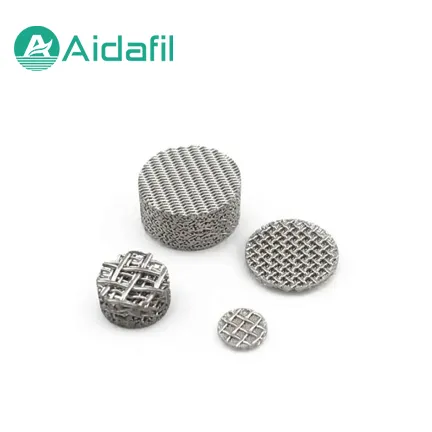
Sintered mesh filters are made by bonding one or more layers of metal mesh or metal fiber. The sintering process creates a fixed porous structure with a controlled pore size and improved mechanical stability compared with a loose woven mesh.
Смешанные фильтры могут быть разработаны для более тонкого удержания частиц и могут обеспечить большую площадь фильтрации в компактном элементе. Структура может включать в себя защитный слой, слой фильтрации и поддерживающие слои. Точная конструкция должна быть подтверждена на чертеже продукта.
Sintered metal media are used in high-temperature, high-pressure, viscous, or chemically demanding applications where a cleanable metal filter may be suitable. Cleaning and regeneration must be matched to the contaminant and the pore structure.
Comparison at a Glance
Свойство | Wedge Wire | Sintered Mesh |
Filtration mechanism | Controlled slot between profiled wires | Fixed porous metal structure |
Typical retention range | Often coarser, depending on slot width | Can support finer filtration depending on construction |
Flow area | Generally open, with a defined slot pattern | Depends on mesh layers and pore size |
Механическая прочность | Good structural strength when correctly supported | High when designed with suitable support layers |
Cleanability | Often suitable for backwashing or mechanical cleaning | Cleanable in some designs, but cleaning must suit the pore structure |
Pressure drop | Depends on slot width, flow area, and flow direction | Depends on pore size, media construction, and flow rate |
Best starting point | Coarse screening, separation, backwash, open-flow applications | Fine metal filtration, high-temperature or demanding process conditions |
The table is qualitative. It cannot replace a pressure-drop calculation, particle-retention review, or compatibility check for a specific process.
Compare Particle Retention Requirements
Start with the smallest particle that must be retained and the acceptable pressure drop. A wedge wire screen is often considered when the required slot is relatively open and the main goal is to retain larger solids while maintaining flow. A sintered element may be considered when finer filtration is required and the process can accept the associated pressure drop and cleaning requirements.
Do not compare only the nominal micron number. Ask how the rating was determined and whether it is a nominal or absolute value. The shape of the particles and the flow direction can affect the result.
Evaluate Mechanical and Pressure Conditions
Both constructions can be strong, but the support structure matters. Check the differential pressure across the element, the maximum pressure, the temperature, and any vibration or mechanical load. A filter that is strong in one direction may not be suitable if the flow can reverse or if the element is cleaned by high-pressure backflow.
Confirm the housing support and the sealing arrangement. A metal element may be durable, but a damaged seal or unsupported end cap can still allow bypass.
Consider Cleaning and Maintenance
Wedge wire screens are often selected where the process allows backwashing or mechanical cleaning. The open slot structure can release some contaminants more easily than a fine porous medium, but the result depends on the contaminant and the cleaning procedure.
Sintered elements can be cleaned in suitable applications, but the cleaning method must not damage the bonded structure or leave contamination trapped in the pores. Verify the recommended cleaning agent, temperature, pressure, and drying procedure with the supplier.
If cleaning is difficult or the contaminant cannot be removed reliably, a disposable or replaceable element may be a better service choice. The lowest purchase price is not the lowest lifecycle cost if the element cannot be cleaned effectively.
Review the Process Fluid and Temperature
Check corrosion resistance, temperature range, and compatibility with the fluid. Stainless steel grades are not equally suitable for every chemical environment. If the process contains chlorides, aggressive additives, or high-temperature oxidation, confirm the material with the supplier.
Also consider gasket and seal materials. The metal filter may be suitable for a high-temperature process, while the seal is not. The complete assembly must be reviewed.
Common Applications to Discuss with a Supplier
Typical questions include:
· Is the filter used for water, oil, gas, solvent, polymer, or another fluid?
· Is the main requirement coarse screening or fine particle removal?
· What is the normal and maximum pressure drop?
· Will the element be backwashed, chemically cleaned, or replaced?
· What are the temperature and corrosion conditions?
· What connection, diameter, length, and sealing arrangement are required?
These details make the difference between a general material comparison and a usable filter specification.
Common Selection Mistakes
One mistake is assuming that a finer filter is always better. A finer element may increase pressure drop, shorten service life, or become difficult to clean. Another is selecting a metal filter because it is reusable without checking whether the contaminant can actually be removed.
Teams sometimes compare a wedge wire slot size with a sintered mesh micron rating as if the numbers had the same meaning. The test method and filtration mechanism may differ. Finally, ignoring the seal, support, and housing interface can lead to a filter that appears to fit but does not perform reliably.